



AI · Article
Meta Launches Spaces, Letting Users Build Custom AI App Screens Through Conversation
디자인 나침반 ·
At a glance
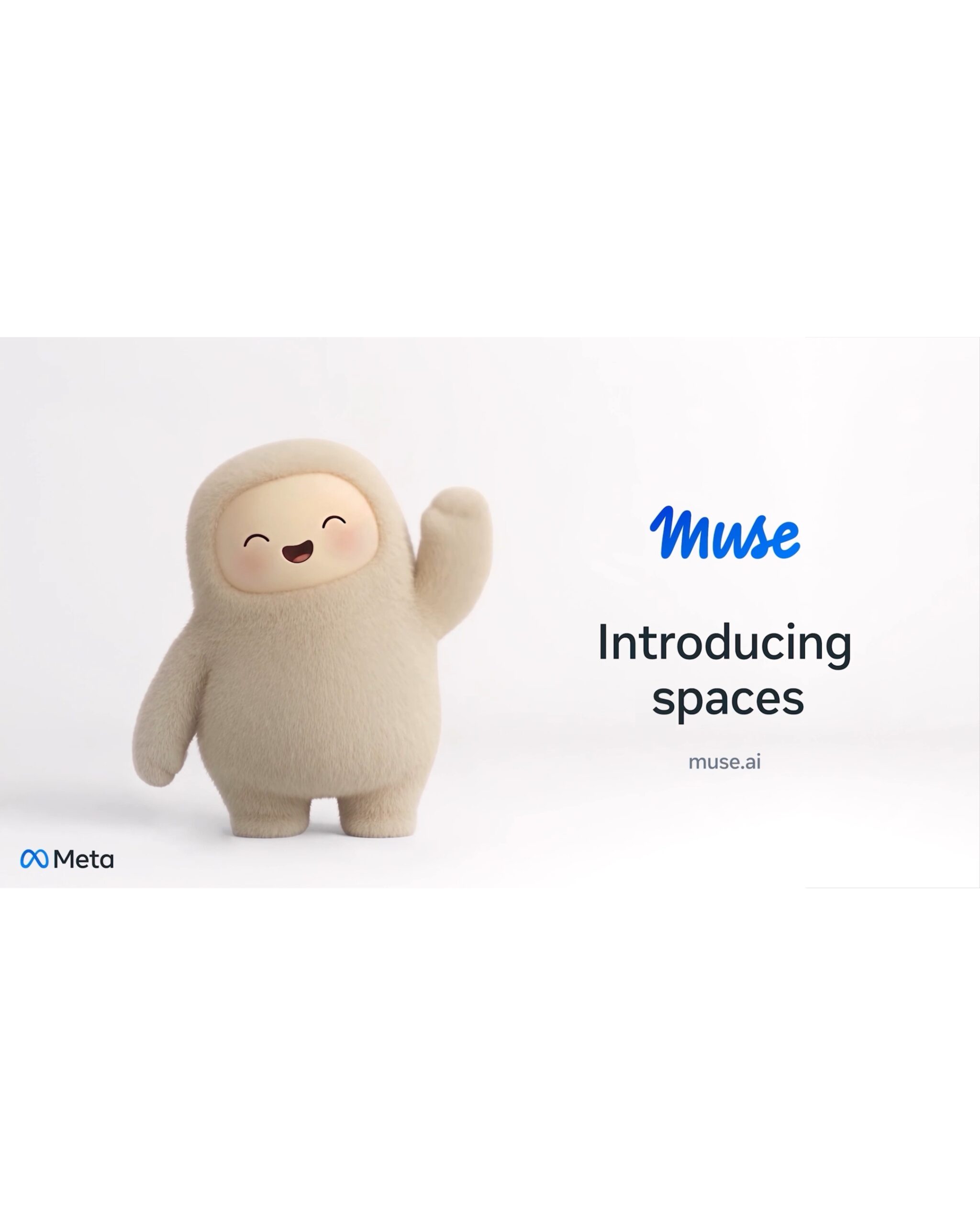
Meta announced Spaces on November 6, a feature that lets users create their own custom screens in its AI app Muse. Users describe what they need in words, and Muse builds a matching space. People can make different screens based on their lives and interests, such as a gift list, a word game, or a DIY project board.
Key points
- You can keep changing a created space through conversation, adding features or altering its look and how it works.
- You can mark tasks as done, add notes, or edit content directly, and your changes are saved.
- Frequently used spaces can be placed in the sidebar or main tabs, unused ones can be hidden, and you can schedule when they appear.
- When you connect other apps, the spaces refresh information in the background. For example, it can find events in your school email and add them to your calendar.
Why it matters
Instead of using apps built to someone else's template, users can request screens by voice or text and build ones that fit their own lives.
Original source
Meta Spaces, 대화로 만드는 나만의 AI 앱 화면
디자인 나침반 · Nov 9, 10:29 KST
Read on 디자인 나침반 ↗AI summarized the original article. Check the original for accuracy. Copyright belongs to 디자인 나침반.
Other coverage
More from this field
- Meta Rethinks 2030 Net-Zero Goal as AI Data Center Emissions Hit Record High
Meta's 2026 sustainability report said the company is re-evaluating its 2030 net-zero goal. Its emissions rose about 40 percent from 2024 to 2025, the largest jump among the big US tech companies.
Ars Technica · Nov 21, 06:47 KST - Anthropic Mathematician Says Claude Helped Crack the Riemann Hypothesis
Levent Alpöge, a mathematician at Anthropic, says he has proved the Riemann hypothesis with help from Claude, Anthropic's AI system. Instead of a regular math paper, he posted a four-page note and linked to computer code that he says checks the result. The claim still needs to be verified.
The New York Times · Nov 21, 06:47 KST - Designers Say Ssense's Website Shows Their Clothes Inaccurately
Designer Reese Cooper noticed his RCOS puffer coat looked distorted on the luxury retailer Ssense's website, with a chest hook drawn far too large. Ssense said some site images came from a "virtual try-on" program, though it would not say whether that program uses AI.
The New York Times · Nov 21, 06:16 KST - Walter Writes AI Tool Rewrites AI Text to Sound More Human, Ad Test Shows
This short video is a sponsored ad for Walter Writes AI, a tool that rewrites AI-generated text so it reads more like a person wrote it. The creator says they ran a paragraph through its detector, rewrote the flagged parts, and compared the scores before and after.
TheAIGRID · Nov 21, 06:15 KST