



Space · Article
Atomic-6 Tests Space Armor to Shield Astronauts From Tiny Space Debris
Payload ·
At a glance
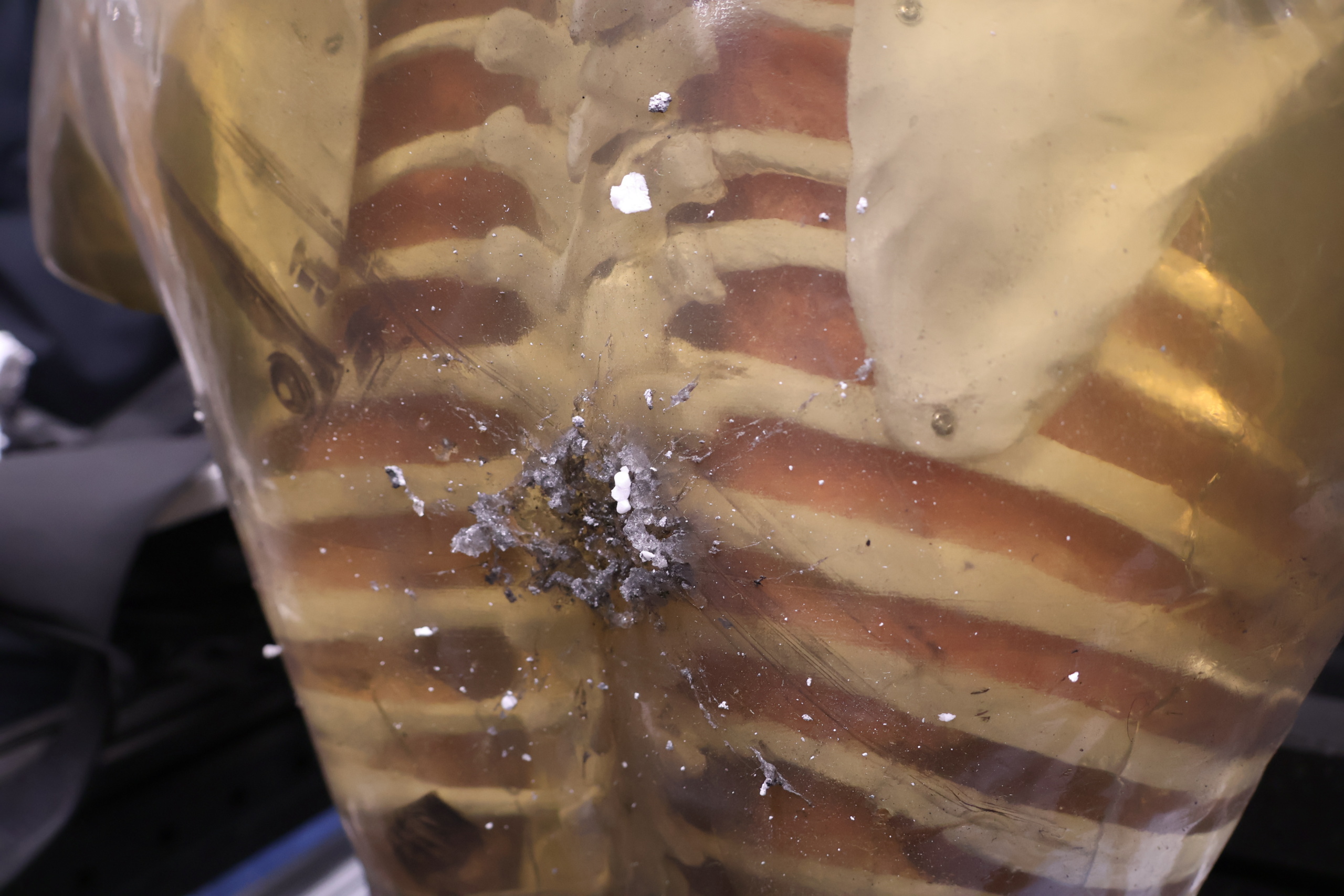
Atomic-6 released test results for its Space Armor tiles, which are designed to shield satellites from debris too small to track. In lab tests, a tile blocked a fast-moving aluminum sphere from reaching a torso model, and it was also flown to orbit to check it survives launch. The company says the tiles could one day protect astronauts on spacewalks, but the tests did not measure injury or suit pressure.
Key points
- Atomic-6 tested whether Space Armor could protect astronauts on spacewalks.
- In lab tests at Texas A&M, a Space Armor Lite tile stopped a 3-mm aluminum sphere moving about 7.2 km/s from hitting a torso model.
- The tile did as well as a 4-mm solid aluminum plate, which stands in for current spacesuit protection.
- The tests did not show injury outcomes or whether a suit would hold pressure after impact.
Why it matters
Tiny debris moving at high speed can damage satellites and could threaten astronauts on spacewalks. A thin shield that fits in a suit would be a practical step toward protecting people in orbit.
Original source
Atomic-6 Wants to Shield Astronauts Against Untrackable Debris
Payload · Nov 20, 23:00 KST
Read on Payload ↗AI summarized the original article. Check the original for accuracy. Copyright belongs to Payload.
More from this field
- NASA's Moon Plan Takes Shape After Starship Catch, but Key Questions Remain
SpaceX recovered its Starship rocket in mid-air last weekend, a big step toward NASA's Moon plans. NASA's Artemis III mission will now be a low-Earth orbit test, and the first crewed Moon landing moves to Artemis IV.
Ars Technica · Nov 21, 05:26 KST - Voyager Passes One Light-Day Out as Starship Nears Operational Use
This video covers recent deep space news, including Voyager's distance milestone and SpaceX's Starship. It is a roundup of updates from late 2026.
Scott Manley · Nov 21, 04:07 KST - Space data center chips may be hard to finance because lenders cannot repossess them in orbit
Space data centers face a financing problem: chips in orbit cannot be repossessed like chips on the ground. Lenders behind SpaceX's $40 billion chip deal reportedly asked that the chips not be used for its orbital data center plans, and it is unclear whether SpaceX agreed.
TechCrunch · Nov 21, 02:40 KST - SpaceX Lenders Reportedly Block Plans to Send Backing AI Chips to Space
SpaceX's lenders reportedly tried to stop Elon Musk from launching the AI chips backing a $43 billion debt package into space. The chips are meant to stay on Earth so lenders can take and sell them if SpaceX defaults. It is unclear whether this rule made it into the final documents.
Ars Technica · Nov 20, 23:15 KST