



AI · Article
Google Launches Gemini Omni 1.2 Video AI That Makes 15-Second Clips, Cutting Prices 30%
AI타임스 ·
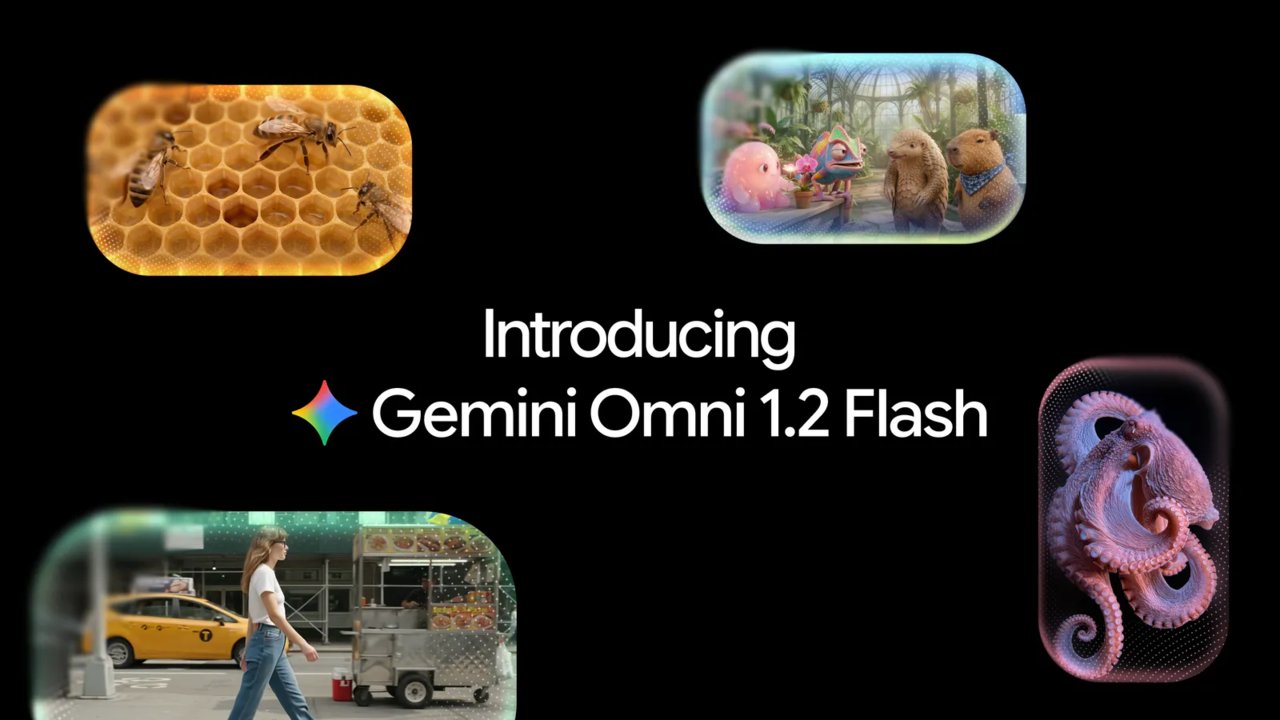
At a glance
Google has released Gemini Omni 1.2 Flash, a video generation AI. It can now create videos up to 15 seconds long in one go, and its usage cost is 30% lower than the previous version. Google says it has improved the tool for commercial videos such as advertisements.
Key points
- Instead of recreating a video from scratch, you can change backgrounds, products, lighting, and more by describing the edits in conversation.
- Characters, product shapes, and brand colors stay largely consistent even when the camera angle changes.
- In scenes with several people speaking, the tool now tells voices apart and matches mouth movements to the dialogue.
- Generated videos include SynthID, a subtle digital watermark (a marker that shows a video was made with AI).
Why it matters
It could reduce the time and cost of making advertising and promotional videos, which may change how video production works.
Original source
구글, 15초 영상 생성 '제미나이 옴니 1.2' 출시…가격 30% 인하
AI타임스 · Nov 6, 16:41 KST
Read on AI타임스 ↗AI summarized the original article. Check the original for accuracy. Copyright belongs to AI타임스.
Google · Ranking and more news
More from this field
- Google Drops Search Button and Adds AI Sidebar to Its Search Homepage
Google has officially rolled out a redesigned desktop search homepage after a successful test. The Google Search button next to the search bar is gone, and a row of AI buttons now sits under the bar. Logged-in users also get a sidebar showing their recent AI Mode conversations.
Ars Technica · Nov 21, 06:58 KST - Meta Rethinks 2030 Net-Zero Goal as AI Data Center Emissions Hit Record High
Meta's 2026 sustainability report said the company is re-evaluating its 2030 net-zero goal. Its emissions rose about 40 percent from 2024 to 2025, the largest jump among the big US tech companies.
Ars Technica · Nov 21, 06:47 KST - Anthropic Mathematician Says Claude Helped Crack the Riemann Hypothesis
Levent Alpöge, a mathematician at Anthropic, says he has proved the Riemann hypothesis with help from Claude, Anthropic's AI system. Instead of a regular math paper, he posted a four-page note and linked to computer code that he says checks the result. The claim still needs to be verified.
The New York Times · Nov 21, 06:47 KST - Designers Say Ssense's Website Shows Their Clothes Inaccurately
Designer Reese Cooper noticed his RCOS puffer coat looked distorted on the luxury retailer Ssense's website, with a chest hook drawn far too large. Ssense said some site images came from a "virtual try-on" program, though it would not say whether that program uses AI.
The New York Times · Nov 21, 06:16 KST