
Stock Market Stalls as Trade Surplus Grows, Splitting Economic Mood Across Sectors
Source 미디어피아
At a glance
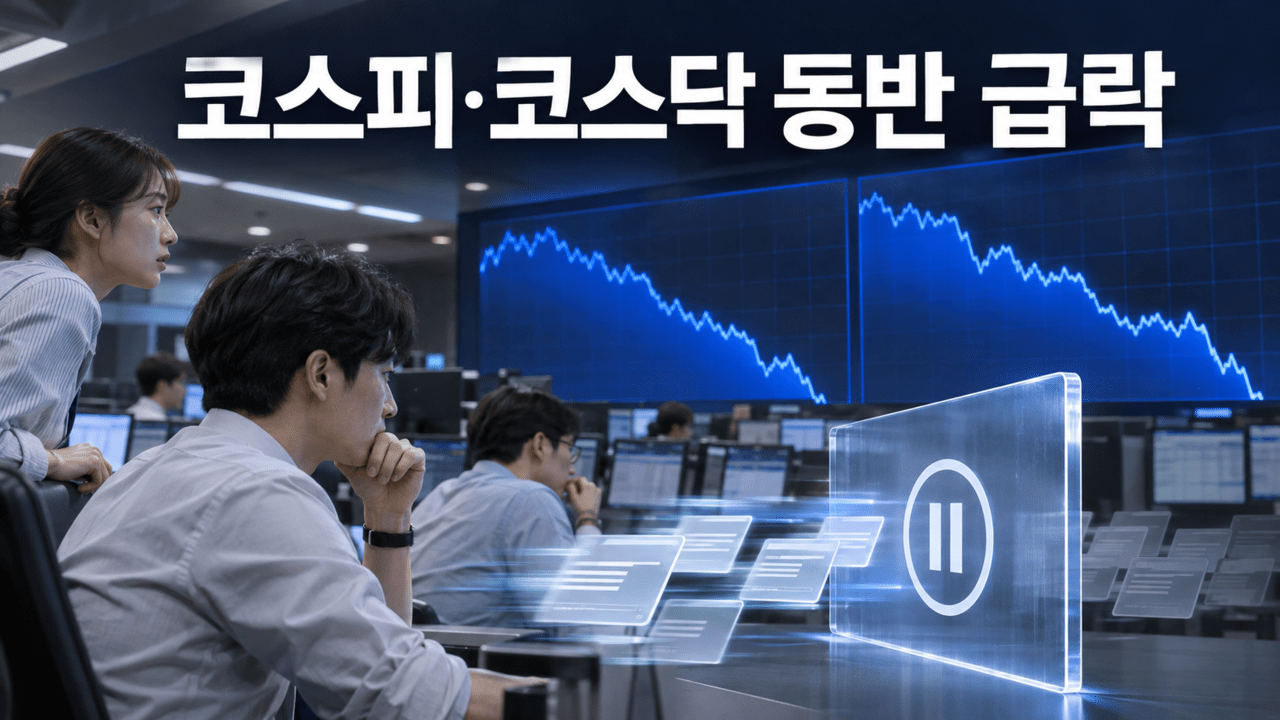
On November 5, the KOSPI fell more than 5%, triggering a sell-side sidecar. Still, a Bank of Korea report showed that September's current account surplus exceeded $60 billion for the first time on a monthly basis. Investors and exporters experienced the same economy very differently.
Key points
Sell-side sidecars were triggered on the KOSPI and KOSDAQ, temporarily halting program trading. Concerns over data center regulation focused on semiconductor stocks.
The September current account surplus was driven largely by higher semiconductor prices. The article also noted that export growth is heavily concentrated in semiconductors, creating high dependence on that sector.
A security inspection of the financial sector covered about 580 institutions. Firms that do not fix vulnerabilities may face enforcement fines.
The number of nationwide apartment auctions rose, but the success rate fell. In Seoul, the winning bid price ratio rose back above 100%.
Why it matters
Exports and stocks, along with finance and housing, are moving in different directions, which shows why the economy is hard to judge by a single number.
Original article
[데일리 경제 분석] (11월 5일) 증시는 멈춰 섰고 흑자는 커졌다…금융·주택·AI가 갈라놓은 경제 체감
미디어피아 · Nov 5, 2026, 6:32 PM GMT+9 · mediapia.co.kr
Read on 미디어피아AI read the original article and summarized it in plain language. It may contain mistakes, so please check the original for accuracy. The article's copyright belongs to 미디어피아.