



AI · អត្ថបទ
Nota Cuts GPU Costs Up to 20% by Optimizing Kimi K3.1 Pro
e4ds news ·
មើលត្រួសៗ
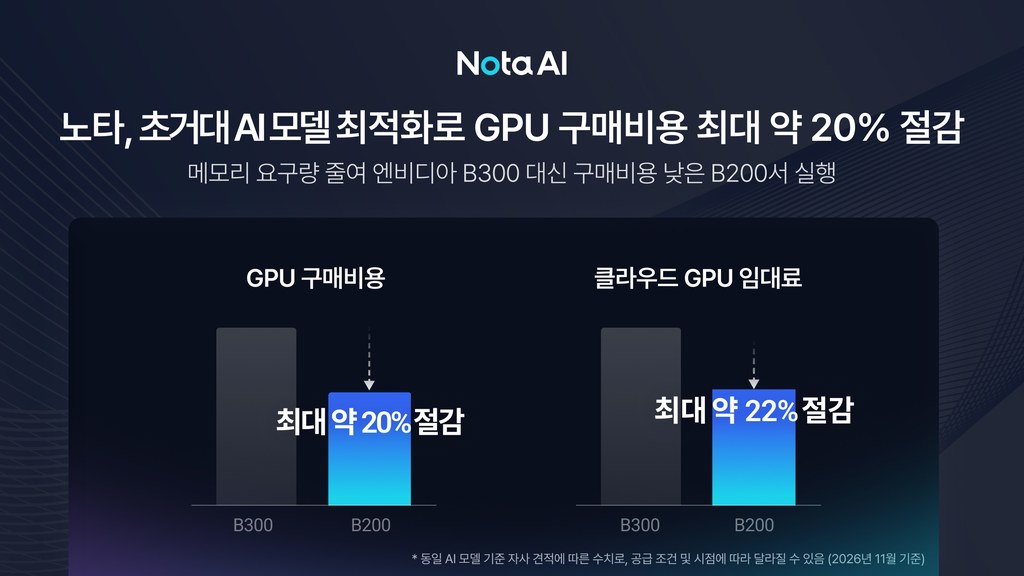
AI efficiency firm Nota has slimmed down the large Kimi K3.1 Pro model so it can run on eight B200 GPUs (AI computing chips) instead of eight B300s. Nota says this can cut GPU purchase costs by up to about 20% and cloud rental fees by up to about 22%.
ចំណុចសំខាន់ៗ
- The model previously needed eight Nvidia B300 GPUs but now runs on eight B200 GPUs.
- Nota used pruning, which removes up to 37% of the model's expert modules (specialized parts inside the model).
- The model kept over 99% of its original score on the GPQA Diamond hard science reasoning test.
- A draft model suggests answers in advance and the main model checks them at once, which speeds up responses.
ហេតុអ្វីវាសំខាន់
Lower hardware costs could make it easier for companies to adopt new AI models.
ប្រភពដើម
노타, 키미 K3.1 Pro 최적화로 GPU 구매비용 최대 20% 절감
e4ds news · Nov 10, 08:11 KST
Read on e4ds news ↗AI summarized the original article. Check the original for accuracy. Copyright belongs to e4ds news.
ការផ្សាយផ្សេងទៀត
Kimi · ចំណាត់ថ្នាក់ និងព័ត៌មានបន្ថែម
បន្ថែមពីវិស័យនេះ
- Designers Say Ssense's Website Shows Their Clothes Inaccurately
Designer Reese Cooper noticed his RCOS puffer coat looked distorted on the luxury retailer Ssense's website, with a chest hook drawn far too large. Ssense said some site images came from a "virtual try-on" program, though it would not say whether that program uses AI.
The New York Times · Nov 21, 06:16 KST - Korean Firms Build Three-Way AI Push: Anthropic Stake, HBM Chips, Claude Rollout
Korean companies are expanding their roles in the global AI market around Anthropic's IPO. SK Telecom earned large paper gains from an early investment, while Samsung Electronics and SK hynix are strengthening chip supply ties. Samsung SDS and LG CNS are bringing Anthropic's Claude model into the business AI market.
뉴스웨이 · Nov 21, 06:10 KST - MIT and IBM Team Probes Gaps in Multimodal AI Understanding
MIT and IBM researchers are studying where today's multimodal AI models fall short, even when they handle text, images, and sound fluently. Their team, co-led by MIT's Jim Glass, builds new benchmarks and training methods that need less labeled data. This Q&A walks through how the project started and how it has evolved.
MIT News · Nov 21, 06:00 KST - Leaky AI Supply Chain Exposes Secret User Data at Alarming Rate
A research test sent nearly two million prompts with fake but working secrets through a network of AI services to see where they ended up. Many of the secrets were stolen, and attackers used them to reach cloud accounts. The results point to weak protection of customer data along the chain.
Ars Technica · Nov 21, 05:59 KST