



From concept to cut: teaching AI video production at a Cambodian graduate school
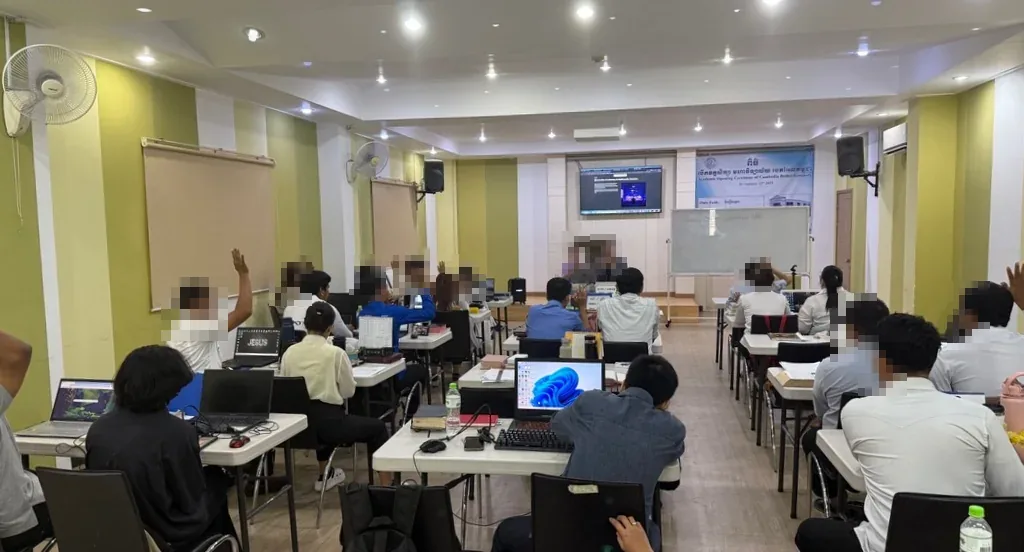
· 8317 viewsIn January 2026, LastAI CEO Santiago spent two days teaching AI video production at a graduate school in Cambodia. The course, “Generative AI Literacy & Multimedia Creation,” took the 31 students on the class roster through making a video from concept to final edit with three AI tools from Google.
The course materials were written in Khmer so students could read them straight away, and an interpreter translated into Khmer throughout both days. The materials were titled “AI Video Production: From Concept to Cut.”
The course began with three problems everyone runs into when making video with AI: randomness, when the same prompt gives a different result every time; consistency, when the main character looks different from shot to shot; and control, directing each shot like a filmmaker instead of writing a prompt and hoping for the best. The materials compared random video generation to a slot machine.
The answer was to give each tool its own job. Gemini acts as writer and director, producing a detailed visual brief of the character, setting and lighting. Whisk is the art department, combining a character, a scene and a style into one reference image. Flow is the camera crew, turning that image into motion and taking camera directions such as walking forward, a close-up or a pan to the right.
The rule the materials stressed most was never to create the main character from text alone in Flow. Making the reference image in Whisk first and then animating it is what keeps the character the same from shot to shot. In the last stage, the shots were laid out on a timeline with transitions and sound effects such as thunder and wind, and the class watched the 15-second result together.
The assignment was a five-second shot made with the three tools in turn. The students split into seven groups and began presentations and short videos on stories they chose themselves, among them a lesson that teaches children the English alphabet with cartoon animals and their sounds.
Students who were unsure at first lit up when a one-line prompt produced a picture and the stories they had written began to move as video.
← មុនOne story, three prompts: an AI lesson in a Cambodian classroomរឿងរ៉ាវទាំងអស់