

Space · Article
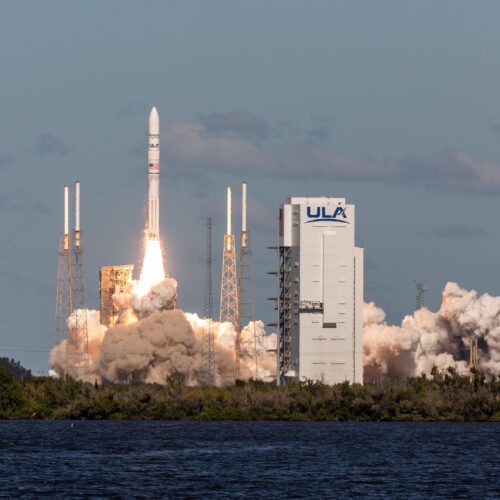
ULA Says Vulcan Failure Came From Too Little Fuel, Not Engines
Ars Technica ·
At a glance
United Launch Alliance (ULA) said its Vulcan rocket failed on a launch last Sunday because it did not get enough fuel to its engines. The company says the engines themselves were not the problem. The finding also helps Blue Origin's BE-4 engine, which is used on its New Glenn rocket.
Key points
- ULA said early checks show weak booster thrust came from too little fuel reaching the BE-4 engines.
- The engines themselves did not cause the failure, according to ULA's preliminary review.
- Blue Origin, which makes the BE-4 engines, said it worked with ULA on the review and agreed with the finding.
- Blue Origin can move ahead with New Glenn's return to flight, which could happen as soon as January.
Why it matters
The result clears the BE-4 engine that other rockets rely on, and it shows ULA still has major problems to solve before Vulcan flies again.
Original source
Vulcan failure caused by inadequate fuel supply to engines, ULA says
Ars Technica · Nov 19, 01:58 KST
Read on Ars Technica ↗AI summarized the original article. Check the original for accuracy. Copyright belongs to Ars Technica.
More from this field
- Voyager 1 Becomes First Human-Made Object One Light-Day From Earth
NASA's Voyager 1 became the first human-made object to be one light-day from Earth, meaning a radio signal now takes a full day to travel each way. The probe is still moving away from the sun at nearly 38,000 mph. The milestone changes nothing physically, but the spacecraft is aging and has only two working science instruments.
Spaceflight Now · Nov 19, 02:46 KST - CUBECOM Opens Delft Office to Win More European Satellite Deals
CUBECOM, a South African maker of radio communication parts for satellites, is opening a new office in Delft, the Netherlands. European customers already make up over half of its yearly revenue, and the company wants to win more deals across the continent.
Payload · Nov 18, 23:00 KST - Inflection Space Systems Books First Orbital Mission With Pax Cubesat for 2028
Inflection Space Systems plans to build a standard satellite bus called Exponent in large numbers. Its first mission, Pax, is a small test satellite set to launch no earlier than 2028 on a rideshare.
Payload · Nov 18, 23:00 KST - Dcubed Raises €27.2M to Quadruple Satellite Parts Output
German satellite-parts maker Dcubed closed a €27.2M (about $30M) Series A extension round, adding to its earlier €4.4M round from August 2024. The new money will expand its factories in the US and Germany to make four times as many thrusters-style actuators and solar arrays.
Payload · Nov 18, 22:26 KST